

Strategising Employee Training for Customer Service Excellence in BFSI – A Perspective
Abstract
Employee training for customer service excellence is crucial in the BFSI sector, where trust, efficiency, and personalized care define success. Since interest rates, account types, and financial products are largely standardized, the true competitive edge lies in how services are delivered. Well‑designed training equips employees to build reliability, handle interactions with empathy, and provide timely support, thereby enhancing customer experience. This article explores the importance of strategically planned training interventions as a pathway to achieving service excellence in BFSI.
Keywords: Service Excellence, Training Strategy, BFSI, Customer-centricity
Introduction
Employee training in customer service excellence is important in the BFSI sector, where trust, efficiency, and personalized service are vital. Moreover, banks deal with sensitive financial matters, and well-trained employees can handle customer interactions with professionalism and empathy, fostering trust and earning customer loyalty. Comprehensive training equips employees to provide accurate information, driving positive NPS (Net Promoter Score), CES (Customer Effort Score) & CSAT (Customer Satisfaction) scores.
Customer Service Excellence in Banking – The Major Competitive Advantage
Banking products now share similar features across banks, and thus service excellence becomes the key differentiator. In an industry where interest rates, account types, and financial products are relatively standardized, the way a bank delivers its services can create a meaningful competitive edge. Continuous training must build a mindset of service excellence, not just compliance. Customer service excellence is the backbone of modern banking and acts as a key competitive advantage. The image (Figure 1) outlines five key
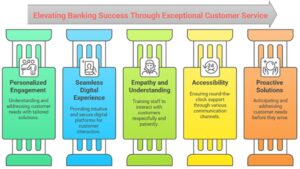
Figure 1: Elevating Banking Success through Exceptional Customer Service
(Source: Managing a customer-experience transformation in banking/www.mckinsey.com)
Figure created using visual AI Tool – www.app.napkin.ai
pillars of exceptional customer service in banking i.e., personalized engagement, seamless digital experience, empathy, accessibility, and proactive solutions as essential drivers of customer satisfaction and business success.
In an environment where banking products and rates can be easily replicated by competitors, it is the quality of customer service that creates loyalty, trust, and positive advocacy. Employee training plays a critical role in improving customer experience in the BFSI sector, where trust, reliability and timely service are essential. Motivated and confident employees are more likely to go the extra mile, explain products clearly, and handle sensitive situations with empathy. When delivered consistently, employee training turns customer service into a key differentiator and one of the strongest competitive advantages in the BFSI sector.
Significance of Customer Service Excellence – What RBI Guidelines Mandate?
In its Bi-monthly Monetary Policy Statement for 2023–24 released on April 6, 2023, the Reserve Bank of India (RBI) announced plans to strengthen the grievance redressal mechanism and improve customer service provided by Credit Information Companies (CICs) and Credit Institutions (CIs). RBI also introduced a compensation mechanism for customers in cases where credit information is updated or corrected with delays. Based on this announcement, RBI issued two detailed frameworks on October 27, 2023, the first framework focused on improving customer service by CICs and CIs, and the second framework on compensation for delayed updation or correction of credit information.
In addition, an expert committee set up by RBI and chaired by former Deputy Governor B.P. Kanungo recommended measures to improve customer service standards across regulated entities. A key recommendation was mandatory soft-skills training for bank staff who interact directly with customers, to reduce instances of misbehaviour and improve service quality. RBI has consistently highlighted that regular customer service training for bank employees is essential to ensure better service delivery and higher customer satisfaction. The following table (Table 1) discusses the role of banks in ensuring proactive customer service as per the RBI guidelines:
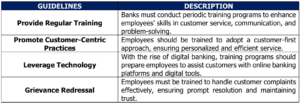
Table 1: RBI Guidelines for Banks on Customer Service
Source: Master Circular on Customer Service in Banks/www.rbi.org.in/
These measures focus on matching employee skills with customer expectations and building a customer-centric banking culture.
Enabling Customer-Centric Culture – Aligning Training Needs to Customer Expectations
A customer-centric training approach helps employees stay updated on new technologies, products, and industry trends, enabling them to adapt to change and meet increasing customer expectations. Investing in employee training is an investment in long-term customer relationships, brand loyalty, and competitive advantage. This is especially important in the banking sector, where trust and personalized service matter most. While banking training programs traditionally focus on communication skills to help employees handle customer queries politely and clearly, the current changing customer expectations require a broader approach. Therefore, training in Customer Service Excellence should focus on the following strategic areas, as illustrated in Figure 2.
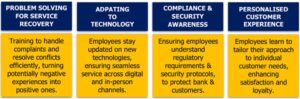
Figure 2: Aligning Training Needs to Customer Expectations
(Source: Self-created by author, insights from different sources)
BFSI Training for Customer Service Excellence – The Guiding Principles
Training is the foundation for building a customer-centric culture in the BFSI sector. It helps align employee attitudes, behaviour, and daily practices with the goal of meeting customer needs and ensuring satisfaction. In banking and financial services, every interaction, whether at a branch, call centre, or digital channel directly affects customer trust, retention, and loyalty. At the same time, effective training improves employees’ confidence, job satisfaction, and commitment. When employees consistently apply these skills, they create positive experiences that leave a lasting impression on both existing and prospect customers.

Figure 3: Role Of Training in Building Customer Centric Culture
(Source: How HR Can Create a Customer-Centric Culture/www.aihr.com)
Training in Customer Service Excellence helps banks improve profitability while staying competitive in a rapidly changing financial environment. Such training equips employees with the right skills and mindset to focus on customer satisfaction and loyalty. It emphasizes understanding customer needs, offering suitable financial solutions, and building trust through clear and transparent communication. By adopting a customer-centric approach, banks can improve service quality and develop long-term customer relationships. Effective training also includes empathy, active listening, and the use of digital tools to enhance the overall customer experience. Ultimately, it empowers banking professionals to deliver consistent, high-quality service while supporting the bank’s growth and service objectives.
Training on Customer Service Excellence – The Tools and Concepts that Matter
This article highlights the significance of these tools in making employee training on customer service excellence effective, engaging and relevant specifically in BFSI domain.
1. Instructional Design – It involves creating instructional materials that are both simplified and engaging. However, it encompasses more than just this generating the material; it involves a careful evaluation of how employees learn and what materials and methods will best help them achieve their learning objectives. The principles of instructional design pertain to the planning, creation, and delivery of educational resources for any learning group across various industries and sectors. Although there are numerous models and theories that emulate instructional design concepts, effective instructional design practices require three key components in all instruction:
2. Instructional Design Model – The A-D-D-I-E Framework The most common and widely used instructional design model is the A-D-D-I-E Framework. Florida State University designed the A-D-D-I-E Framework for the United States military in the 1970s. The ADDIE Model offers a flexible framework for creating engaging training and instructional materials through five interrelated phases:

Figure 4: The A-D-D-I-E Stages
Source: Blog – ADDIE Model, www.aihr.com
Analysis
The instructional problem is identified, goals, metrics, and objectives are defined, while learner information, including environment, preferences, demographics, and knowledge, is gathered.
Design
During the design phase, learning objectives, instructional methods and activities, storyboards, content, subject matter expertise, lesson outlines, and media assets are determined.
Development
During the development phase of the ADDIE Model, instructional designers produce the materials and learning interactions outlined in the design phase. This phase involves writing text and creating and compiling graphics, audio, and photography.
Implementation
While implementing, the instructional designer combines content and materials into Learning Management Systems (LMS) or provides them directly to the trainer for live training sessions. Additionally, the instructional designer provides training for trainers, facilitators, subject matter experts, or instructors.
Evaluate
During the evaluation phase, success is defined and measured through both formative and summative stages. Throughout the design process, formative evaluation is iterative, whereas summative evaluation entails testing post-material feedback to assess training objectives.
The training model offers a streamlined and organized framework for developing an effective learning product, which can be delivered via online or offline training programs, coaching sessions, presentations, or information booklets. As the framework clearly defines job behaviours, knowledge, and skills, it also serves as a guide for measuring learning effectiveness.
3. The Kirkpatrick Model
The Kirkpatrick Model is a widely used framework for evaluating the effectiveness of training and learning programs. It measures both formal and informal training across four levels: Reaction, Learning, Behaviour, and Results.

Figure 5: The Kirkpatrick Model
(Source: The Kirkpatrick Model, www.kirkpatrickpartners.com/the-kirkpatrick-model/)
The Model offers a clear and effective way to assess customer service excellence training in banks and ensure it aligns with organizational goals. It evaluates the training at every stage i.e., from employee feedback to measurable business outcomes. Each level builds on the previous one, helping banks understand how effective the training is.
4. Blooms Taxonomy
Bloom’s Taxonomy is a learning framework developed by Benjamin Bloom and his colleagues to classify educational goals. It describes six levels of thinking skills: Remembering, Understanding, Applying, Analysing, Evaluating, and Creating. The stages represent the process that helps structure learning objectives and outcomes:
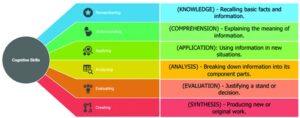
Figure 7: Bloom’s Taxonomy and Stages
(Source: The Kirkpatrick Model of Training Evaluation, By Devlin Peck/www.devlinpeck.com/)
Figure created using visual tool – www.app.napkin.ai
Bloom’s Taxonomy has immense significance in banking training as it provides a structured framework to design and assess learning outcomes, ensuring employees acquire both foundational and advanced banking skills and conceptual understanding. By emphasizing cognitive levels such as remembering, understanding, applying, analysing, evaluating, and creating, it allows trainers to crate sessions that not only impart knowledge but also foster critical thinking, problem-solving and situation handling required in the dynamic banking environment. Bloom’s Taxonomy empowers banking organizations to upskill employees systematically, making training programs impactful and goal-oriented.
Conclusion
In conclusion, employee training is the cornerstone of customer service excellence, especially in the banking industry. It empowers staff with the skills, knowledge, and confidence to deliver exceptional customer experiences. Continuous training fosters customer centricity, loyalty, and sustained growth. The A-D-D-I-E framework, Bloom’s Taxonomy, and Kirkpatrick Model each play a vital role in enhancing the effectiveness of training programs in the banking industry. Together, these models provide a clear, results-focused training approach that improves service quality, employee performance, and customer satisfaction in the banking sector.
Authored by:

Mukti Prakash Behera
Faculty in Marketing
State Bank Staff College – Hyderabad