SMA-1 Explained: What a 31–60 Days Overdue Loan Means
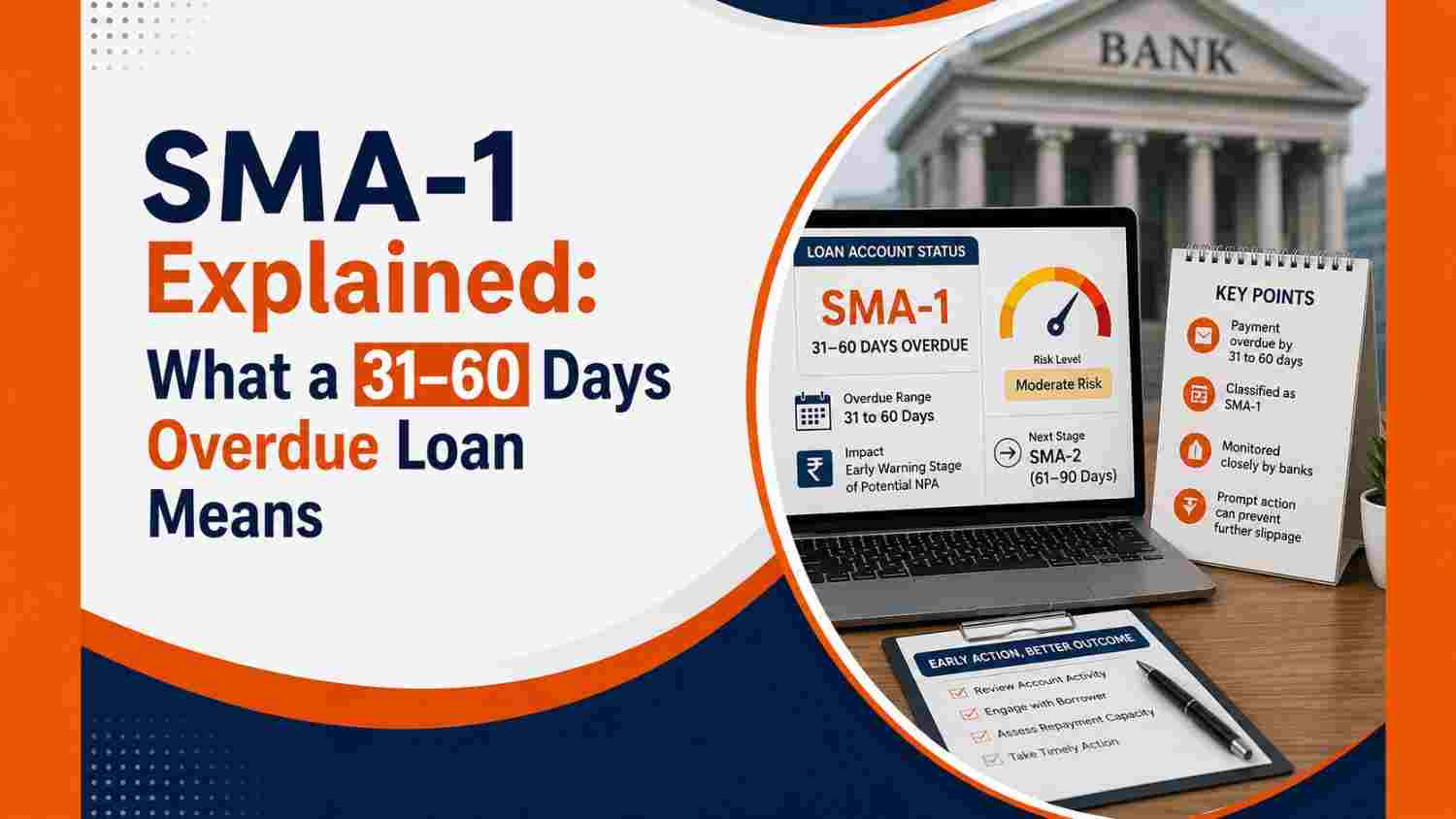
When a borrower misses an EMI or interest payment and the delay stretches past a month, the loan does not become a non performing asset overnight. The Reserve Bank of India built a graded early warning system called Special Mention Account classification to catch stress long before it turns into a bad loan. SMA-1 is the second stage of this system, applying to accounts where the principal or interest remains overdue for a period of 31 to 60 days. Understanding what SMA-1 means, why it matters, and how banks respond to it is essential for anyone tracking credit risk, loan monitoring, or asset quality trends in the Indian banking sector.
Understanding the SMA Framework
The RBI introduced the Special Mention Account framework to help lenders identify incipient stress in borrower accounts well before the account slips into the 90 day NPA threshold. The logic is simple. The earlier a bank spots trouble, the more room it has to intervene, recover dues, and prevent the account from deteriorating further. Under the current framework, accounts are tracked from the very first day of default and classified as follows.
SMA-0 covers accounts where dues are overdue for up to 30 days, or where the account shows signs of stress even without a missed payment. SMA-1 applies when dues remain overdue for more than 30 days and up to 60 days. SMA-2 covers accounts overdue for more than 60 days and up to 90 days. Beyond 90 days of continuous overdue, the account is classified as a Non Performing Asset. For a full side by side breakdown of all three stages, read our SMA-0 vs SMA-1 vs SMA-2 complete guide.
This classification is based on the day end process. If a loan’s due date falls on a particular calendar date and the full amount is not received before the bank runs its day end process, the account is marked overdue from that date. If the default continues uninterrupted, the account automatically moves into SMA-1 status once it completes 30 days of continuous overdue, without any manual intervention required from the branch.
What SMA-1 Signals for a Bank
SMA-1 is not a punitive classification in itself. There is no additional provisioning requirement attached to this stage, and the loan continues to be treated as a standard asset on the bank’s books. What changes is the intensity of monitoring. Once an account crosses into SMA-1, it typically triggers a set of internal actions.
Relationship managers and branch officers are expected to reach out to the borrower to understand the reason for the delay, whether it is a temporary cash flow mismatch, a change in income, or a more structural repayment problem. Credit and risk teams begin tracking the account more closely as part of portfolio monitoring, since SMA-1 accounts have a measurably higher probability of slipping further into SMA-2 and eventually into NPA if left unaddressed. Many banks also use this stage to reassess the borrower’s overall exposure, checking for early warning signals such as bounced cheques, reduced account activity, or deteriorating financial ratios that may point to broader stress. For a detailed look at the specific corrective steps banks are expected to take at this stage, see our guide on what banks should do when an account enters SMA-1 or SMA-2.
Reporting to CRILC
For loans above a specified threshold, banks and other lending institutions are required to report SMA classification, including SMA-1 status, to the Central Repository of Information on Large Credits. This reporting system allows regulators and lenders to get a system wide view of stress building up in large borrower accounts across multiple banks, rather than each lender operating with only a partial picture of a borrower’s repayment behaviour. An account tagged as SMA-1 at one lender becomes visible information for other lenders exposed to the same borrower, which supports coordinated monitoring and, where necessary, joint resolution efforts. Read our detailed explainer on CRILC reporting and RBI’s large credit monitoring system for more on how this works.
Can an SMA-1 Account Move Back to Standard?
Yes. Unlike an NPA, which requires the entire arrears of interest and principal to be cleared before an upgrade, an SMA classification is more fluid. If the borrower clears the overdue amount and the account has nil arrears when the day end process runs, the account moves back to standard status immediately. This reversibility is precisely why early intervention at the SMA-1 stage matters so much. A borrower who is contacted promptly and offered support, whether through a revised repayment schedule or a clear reminder of consequences, is far more likely to regularise the account before it slides further down the classification ladder.
Why This Matters Beyond Compliance
For credit professionals, branch managers, and risk teams, SMA-1 is a working signal rather than a bureaucratic label. It marks the window where proactive outreach genuinely changes outcomes. Left unattended, a 31 to 60 day overdue account has a real chance of becoming a 61 to 90 day overdue account, and from there, a non performing asset with all the provisioning and recovery costs that follow. Treated seriously, it is often just a borrower who needs a phone call, a reminder, or a short term repayment adjustment.
For borrowers, an SMA-1 tag is also worth taking seriously even though it does not directly appear as a default on credit reports the way an NPA does. Lenders factor SMA history into future credit decisions, and a pattern of repeated SMA-1 classifications can affect a borrower’s standing with a bank well before any formal default is recorded.
Conclusion
SMA-1 sits at a critical midpoint in the RBI’s early warning framework, flagging accounts overdue between 31 and 60 days before they drift toward NPA status. It carries no provisioning burden but demands closer monitoring, borrower outreach, and in many cases CRILC reporting. For banks, it is the last comfortable window to intervene. For borrowers, it is a clear signal to act before the account slips further. To see how this stage fits into the complete journey from a standard asset to an NPA, read our guide on when an SMA account becomes an NPA.