
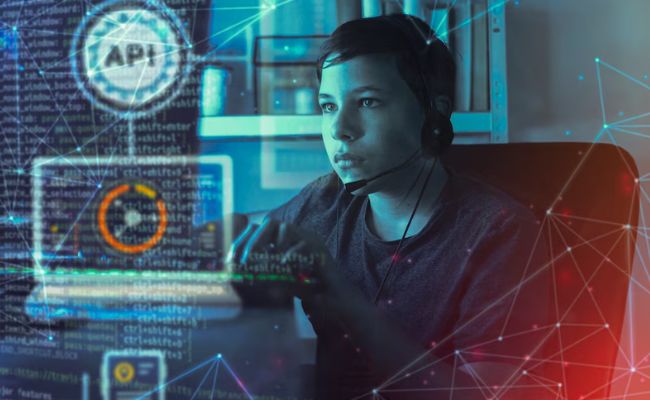
Neuroadaptive AI in Leadership Development

Let’s set the scene. A serene leadership retreat tucked away in the hills, where lanyards came with scented name tags and every conversation involved the phrase “let’s unpack that”. A vice president, let’s call him Samar, known for his sharp instincts, spreadsheet-perfect memory, and a reputation for getting deals done before lunch., sipped his green tea with the kind of intensity that made interns nervous. He expected a weekend of leadership theory, trust falls, and perhaps an epiphany or two served with locally-sourced granola.
Instead, the retreat organizers, ever eager to push the envelope, rolled in a cart stacked with neuroadaptive headsets. Shiny. Sleek. Minimalist in that vaguely dystopian way. “We’ll begin with a leadership simulation,” someone announced. “But with a twist. The AI will adapt in real-time based on your neural responses.”
Daniel raised an eyebrow. A headset was placed gently on his head, the sensors cool against his temples. The screen lit up. A scenario unfolded—team conflict, budget constraints, a boardroom full of virtual stakeholders. He launched into response mode, calm and assertive, the way he’d practiced for years. But just minutes in, the screen pulsed. Then came the AI’s polite but firm nudge: “Your stress response is elevated. Would you like a break or to reframe the scenario?”
He froze. Not from panic, but from awe. The AI had seen through the practiced calm and flawless rhetoric and spoken directly to his nervous system. Neuroadaptive AI had introduced itself, not with fanfare, but with brutal intimacy. Turns out, Samar’s brain didn’t buy what his mouth was selling.
Neuroadaptive AI wasn’t just listening. It was watching. It was interpreting micro-signals, subtle hesitations, unspoken doubts, and stress markers invisible to even the best human coach, and adjusting the learning journey accordingly. It wasn’t just feedback. It was a mirror. And for many in that room, it was the first honest one they’d looked into in a while.
Reading Your Mind: What Neuroadaptive AI Actually Does
How many times have you noticed how your boss’s mood changes faster than a crypto exchange chart? Like, on Monday they are a walking TED Talk, and by Tuesday they are a deflated tire. And then you start wondering if they are okay or just under pressure from the controlling office. Well, what if I told you there’s a kind of artificial intelligence that knows? Not like your therapist knows. Not like your spouse thinks they know. I mean actually knows. It’s like reading your heart rate while decoding your dopamine levels during that awkward performance review.
Imagine your brain as a crowded newsroom during a breaking story. Signals are firing: stress here, distraction there, maybe a bit of caffeine-induced overconfidence. Now imagine someone walks in who can instantly translate that noise into a clear headline. That someone is neuroadaptive AI.
Technically, it’s a blend of biosensing, using EEG (electroencephalogram), eye tracking, skin conductivity, and machine learning algorithms trained to recognize your internal state. It doesn’t just observe how fast you click or where your eyes dart. It digs into what your mind is struggling with, even before you can name it. Imagine AI systems that don’t just learn from data. They respond to you. You being the cognitive, emotional, and neural hurricane that is the modern human leader. Neuroadaptive AI integrates:
- EEG sensors
- Biometric feedback (heart rate variability, pupil dilation)
- Behavioral analytics
It combines it with machine learning models that adjust interfaces, coaching styles, and even tone of voice based on your current neurological state. It’s like if Microsoft Teams became your therapist, executive coach, and HR department all in one. And yes, it would still hang during presentations.
From Silence to Signal
Ann Johnson, a former teacher who lost her ability to speak after a brainstem stroke in 2005, became one of the first people to regain her voice using a brain–computer interface. In August 2023, researchers used tiny electrode arrays implanted in her brain to decode her neural signals and synthesize speech through a digital avatar—restoring not just words but emotional nuance in real time. Her story is a breakthrough moment not only for assistive tech but also for future leadership development tools that may rely on neuroadaptive AI to interpret emotional tone, stress levels, and cognitive clarity in high-stakes scenarios. If a BCI (Brain Computer Interface) can capture the intent and inflection of a woman silenced for 18 years, it can surely help train tomorrow’s leaders to listen, reflect, and adapt with more than just data—they can do it with insight.
Diagnosed with ALS in 2012, Pat Bennett progressively lost her speech until in March 2022, a team at Stanford implanted arrays in her brain’s speech cortex, enabling her to “speak” again via a BCI that decoded her neural activity into text at roughly 62 words per minute—an unprecedented pace for such technology. Her journey redefines what assistive technology can do: not just restore lost functions, but enable real-time, high-fidelity communication that evolves with the user. For organizations, her case strengthens the business case for inclusion-first tech strategies—where every employee, regardless of physical limitation, can contribute at full cognitive capacity. In leadership development, this translates into building tools that adapt not only to capability but also to context, paving the way for neuro-inclusive innovation as a pillar of performance and retention.
In May 2025, Bradford Smith, a former athlete paralyzed by ALS, became the first Neuralink BCI patient to script, edit, and upload a YouTube video using only brain signals—his cursor controlled via imagined jaw movements, his narration delivered through a synthetic voice modelled on pre-ALS recordings. His case shatters conventional notions of what “disabled” means and reframes assistive tech as a platform for expressive agency. For corporate leaders and HR strategists, Bradford’s success story is an undeniable signal that investing in brain-computer interfaces is not charity—it’s a high-yield, future-ready component of ROI. In a world where remote work, asynchronous collaboration, and creative autonomy are currency, Bradford’s mind-led editing desk may well be a prototype for tomorrow’s leadership tools.
This technology can distinguish between distraction and fatigue, between nervousness and calculated silence. In addition to detecting what you’re doing, it also senses why. And it doesn’t stop at observation. It adapts the learning experience in real time. Confused? The content slows down. Unengaged? It pivots. Stressed? It reframes. Imagine your corporate training modules suddenly acting like a wise mentor who actually knows when you’re zoning out.
The Psychology of Authority
Let’s get real. Leadership, especially in finance, is half math and half theater. You need to look calm when things go wrong, and you need to feel calm when giving a town hall that feels like a shareholder trial. Neuroadaptive AI can help strip the bluff. It can detect when a leader is engaging in impression management: projecting confidence while experiencing internal panic. Through subtle feedback loops (vocal pitch, breathing irregularity), it can prompt leaders with mindfulness nudges or even pause decision processes in high-stakes digital environments.
Banking leadership, in particular, is filled with “executive fatigue”—decision overload due to high-stakes environments. Neuroadaptive AI acts like a co-pilot with access to your limbic system. Neuroadaptive AI not only observes your responses, but it responds accordingly with the appropriate steps or actions to be taken.
Adaptive Coaching
Every bank has that one annual leadership conclave, where they bring in some “expert” to talk about “Agile Emotional Governance. Now imagine that same session being run by Neuroadaptive AI. Instead of a one-size-fits-all workbook, each leader gets a personalized dashboard showing:
- Their emotional reactivity curve over the last quarter
- Their bias patterns (e.g., loss aversion, overconfidence)
- Their neuroplasticity score i.e. how easily they adapt to feedback over time
Forget a 360 review. This is a review with real-time EEG data and predictive modeling of stress responses. The coaching becomes tailored. If Rajeev from Treasury is data-driven but emotionally avoidant, the AI jumps straight to loss-simulation models with risk-reward visualizations that actually land.
Furthermore, with low-cost EEG headsets and biometric wearable tech, Neuroadaptive AI doesn’t need you to have a 3 letter designation. Say Kavita, a relationship manager in Hyderabad, is dealing with high stress situation. Her Neuroadaptive CRM system detects rising heart rate, skin conductance spikes, and vocal strain.
It adjusts the interface to Rreduceeduces pop-ups and activates and activates coaching prompts (“Pause before responding. Try empathic reframe.”). Or, imagine fraud analysts scanning alerts, wearing neural radar headsets that can spot when mental fatigue sets in. The system nudges them to take a micro-break just before they accidentally greenlight a suspicious transaction. That could be the difference between a headline and a whisper.
Moving from employees to customers, BCIs could authenticate payments via unique brainwave patterns—so no more stolen PINs, no cloned cards, just your brain signing the check. Picture someone with a disability using neural authentication to apply for a loan or transfer funds without touching a device. Online loan applications could be equipped with passive EEG headbands. If the customer’s stress signals elevate while reading loan terms, the interface adapts by providing simpler explanations, clearer examples. It’s human‑first banking and true inclusion.
When neuroadaptive systems help us recover voice, boost empathy, sharpen attention, and secure transactions, we’re deepening human trust in money’s most human domain. These tools will amplify the banker’s capacity to connect and perform in ways that no algorithm, no matter how complex, can replicate.
For boards and leadership teams neuroadaptive BCIs offer something that looks less like automation and more like emotional augmentation. For banks it might mean fewer fat-finger errors, deeper client loyalty, lower burnout, fewer fraud losses and just maybe that regained spark of humanity in finance. It’s no longer AI reacting to customers anymore. Instead, the AI is responding to human emotion under pressure.
Owning Your Neurodata: Promise and Peril
Here’s where the gloves come off. Neuroadaptive AI is powerful, but also invasive. These systems generate rich, sensitive data. Your emotional triggers. Your stress patterns. Your hesitation signals. If someone else holds that data, do they hold the power? Should neurodata be used in promotion decisions? What if your blink rate in a simulation affects your leadership potential score? What about cultural bias, where assertiveness in one culture is read as aggression in another?
Bias creeps in when we interpret data without lived context. And neuroadaptive AI, for all its sensitivity, isn’t immune. We need ethical guardrails: consent, transparency, secure data policies. And we need to ensure that AI augments leadership development rather than automating judgment. Neurodata is a gift, but only when it stays in the hands of those it belongs to. In banking, where confidentiality and trust are paramount, there are red zones here. So the implementation of Neuroadaptive AI has to come with:
- Voluntary enrollment
- Data localization and end-to-end encryption
- Usage transparency
- Right to opt-out without prejudice
The Future Is Adaptive
A 2023 McKinsey research estimates that companies with emotionally intelligent leadership outperform peers by over 20 percent on long-term metrics. But what if you could codify that emotional intelligence? Not just teach it, but architect it into the system? Neuroadaptive AI is not about replacing intuition. It’s about validating it, enhancing it and stress-testing it in real time.
Instead of trying to make robot leaders, the purpose is to make more human ones. Ones who are armed with real-time insight, physiological self-awareness, and the capacity to know when their brain’s just hangry. Imagine a bank where burnout isn’t considered heroic, where resilience isn’t considered luck instead, your nervous system is part of the strategy deck.
Let’s not pretend neuroadaptive AI is perfect. Some vendors oversell. Some systems underdeliver. And some days, the tech feels like a sci-fi episode written by interns. But when it works, it really works. It reveals blind spots with uncomfortable clarity. It challenges surface-level learning. It calls our bluff when we pretend to be fine. And perhaps most importantly, it helps leaders reconnect with themselves.
Leadership isn’t just about vision, charisma, or quarterly wins. It’s about self-awareness, emotional agility, and the courage to confront what’s real, even if it’s broadcast on a brainwave frequency. And that, strangely enough, is where the future of leadership development may be heading: not toward harder skills or more modules, but toward deeper knowing, powered by the quiet honesty of our own neural signals.
Because in the end, the best leadership insight might not come from a book or a coach, but from the whisper of your own brain, decoded by a machine that just wants to help you grow. That’s not just innovation. That’s biopsychological leadership at scale.
Authored By:
Nirooj Fidin
Research Officer
Senior manager (IT)
Union Learning Academy, Digital Transformation
Union Bank of India
Mumbai-400072