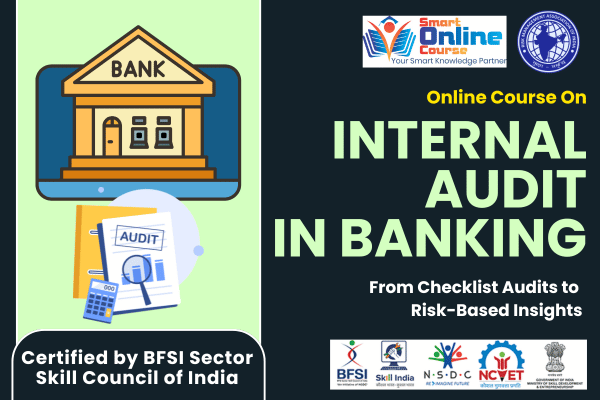
Online Certificate Course on Internal Audit in Banking
Internal audit is a critical control function in banking because it helps institutions assess whether risks are being identified, controls are working effectively, and operations are being carried out in line with policy and regulatory expectations.
The Online Certificate Course on Internal Audit in Banking is designed to provide a practical understanding of how banking audits are planned, executed, documented, reviewed, and reported.
The programme offers approximately 7 hours of self-paced learning with 120 days of access and follows a practical, case-study-based approach. It is suitable for banking professionals, auditors, finance professionals, and learners who want to build stronger audit and assurance skills.
Why Internal Audit Matters in Banking
Banks operate through a large number of processes, products, systems, branches, and control points. Weakness in any of these areas can create operational, financial, compliance, or reputational risk.
Internal audit helps management understand whether:
- Processes are operating as intended
- Controls are designed appropriately
- Regulatory requirements are being followed
- Documentation is complete
- Exceptions are identified
- Recurring issues are being addressed
- Corrective actions are effective
A strong audit function does more than identify mistakes. It helps improve control quality, governance, and operational discipline across the institution.
About the Course
The Internal Audit in Banking course provides end-to-end exposure to the internal audit process.
The programme begins with audit frameworks and audit types, then moves into planning, scoping, walkthroughs, sampling, testing, evidence, working papers, audit observations, severity classification, and quality oversight.
The focus is practical.
Learners are introduced to the actual steps involved in performing an audit, including how to define scope, select samples, test controls, document evidence, write observations, and evaluate recurring issues.
The objective is to help participants move beyond theory and understand how professional audit work is carried out in banking environments.
What Will You Learn?
By completing the programme, learners will develop a stronger understanding of:
- Internal audit frameworks
- Different types of banking audits
- Audit planning
- Audit scoping
- Process walkthroughs
- Sampling techniques
- Test of controls
- Audit evidence
- Working papers
- Observation drafting
- Severity classification
- Recurring audit issues
- Audit quality oversight
The course is designed to strengthen both technical audit knowledge and practical execution discipline.
Course Curriculum
The programme includes six focused modules.
Module 1: Audit Framework & Types in Banking
This module introduces the role and purpose of internal audit within banks.
Learners understand different audit approaches and how internal audit supports governance, risk management, and control effectiveness.
The module also provides context on how audit coverage may vary across branch operations, credit, risk, compliance, technology, and other banking functions.
Module 2: Audit Planning, Scoping & Walkthrough Execution
Good audit quality begins with strong planning.
This module explains how auditors define objectives, determine scope, understand processes, identify key risks, and perform walkthroughs.
Learners understand how process walkthroughs help auditors evaluate whether controls are designed and implemented as expected before detailed testing begins.
Module 3: Sampling Discipline & Test of Controls Execution
Auditors usually cannot test every transaction.
This module explains how sampling is used to select transactions or records for review.
Learners explore:
- Sample selection
- Control testing
- Exception identification
- Test documentation
- Evaluation of control effectiveness
The focus is on applying sampling in a disciplined and defensible manner.
Module 4: Evidence Documentation & Audit Working Papers
Audit conclusions must be supported by reliable evidence.
This module focuses on how auditors collect, organise, and document audit evidence.
Learners also understand the importance of clear working papers that show:
- What was tested
- How it was tested
- What evidence was reviewed
- What exceptions were found
- How conclusions were reached
Strong documentation improves audit quality and makes findings easier to review.
Module 5: Observation Drafting & Severity Classification
Audit observations need to be clear, factual, and useful.
This module explains how to draft observations that identify the issue, risk, control weakness, and potential impact.
Learners also explore severity classification and how findings may be prioritised based on factors such as risk exposure, regulatory significance, financial impact, and recurrence.
Module 6: Recurring Audit Issues & Quality Oversight
Recurring findings may indicate deeper control weaknesses.
This module examines how audit teams can identify repeated issues, evaluate root causes, and improve follow-up and quality oversight.
It also helps learners understand the importance of consistency, review standards, and professional judgment in internal audit.
Who Should Enroll?
The course is particularly relevant for:
- Internal audit professionals
- Banking audit teams
- Risk management professionals
- Compliance professionals
- Banking operations teams
- Chartered accountants
- Finance professionals
- Internal control professionals
- Assurance professionals
- Freshers planning audit careers
- Students pursuing banking, finance, audit, or risk roles
It can also be useful for professionals preparing to move into internal audit, control testing, or assurance functions.
Key Skills You Can Develop
The programme can help strengthen your understanding of:
- Audit planning
- Risk-based scoping
- Process walkthroughs
- Sampling
- Control testing
- Evidence evaluation
- Working-paper preparation
- Observation writing
- Severity classification
- Root-cause identification
- Issue tracking
- Audit quality control
These capabilities are useful across banks, NBFCs, financial institutions, consulting firms, and assurance functions.
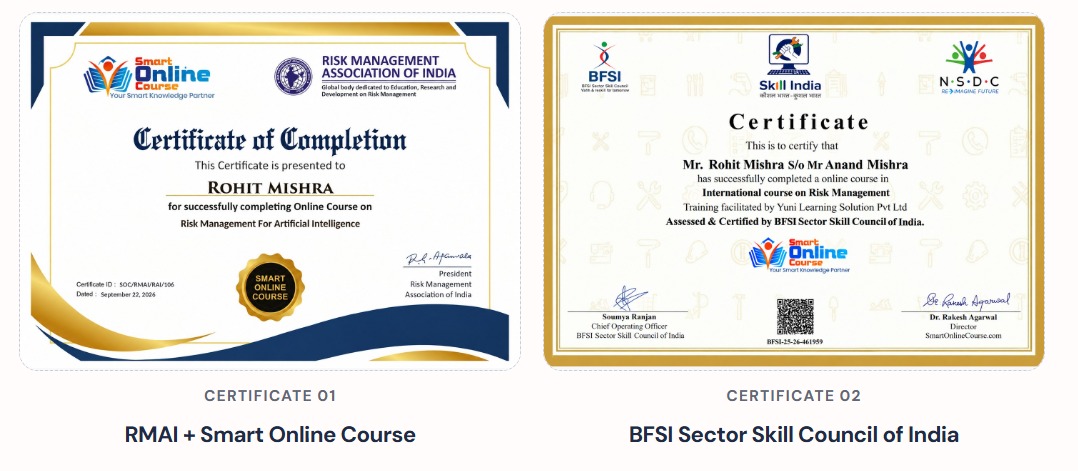 Course Highlights
Course: Internal Audit in Banking
Duration: 7 Hours
Access Validity: 120 Days
Mode: Self-Paced Online Learning
Learning Method: Practical + Case Study-Based
Level: Beginner to Advanced
Focus: Audit Planning, Testing, Documentation & Reporting
The programme is designed for learners who want a practical understanding of internal audit rather than only conceptual knowledge.
Career Relevance
Internal audit knowledge can support roles such as:
- Internal Auditor
- Banking Audit Executive
- Risk and Control Analyst
- Compliance Analyst
- Assurance Professional
- Operational Risk Analyst
- Control Testing Specialist
- Finance and Audit Professional
- Branch Audit Officer
- Audit Quality Reviewer
For students and early-career professionals, the course can also provide structured exposure to the audit lifecycle and help build familiarity with professional audit practices.
Interested in the Branch Operations & Internal Control Management Course?
If you want to strengthen your understanding of branch workflows, maker-checker controls, cash operations, reconciliation, documentation, and audit discipline, this programme provides a practical learning pathway.
Request Course Information
Want details about the fee, certification, examination, or course suitability?
Complete the study enquiry form
Speak to Our Team on WhatsApp
Have questions about the programme or want guidance before enrolling?
Sales / Course Enquiry
Mobile number: 82320 83010
Email: info@smartonlinecourse.org
Frequently Asked Questions
Q. What is the duration of the course?
The programme includes approximately 7 hours of learning.
Q. How long is course access available?
Learners receive 120 days of access.
Q. Does the course cover audit planning and scoping?
Yes. A dedicated module covers planning, scoping, and walkthrough execution.
Q. Are sampling and control testing included?
Yes. Sampling discipline and test-of-controls execution form a separate module.
Q. Does the course cover audit working papers?
Yes. Evidence documentation and working papers are covered in detail.
Q. Are audit observations and severity ratings included?
Yes. The programme includes observation drafting and severity classification.
Build Practical Internal Audit Skills
Internal audit in banking requires professionals to combine risk understanding, control testing, documentation, judgment, and clear reporting.
The Online Certificate Course on Internal Audit in Banking brings these areas together in a focused 7-hour self-paced programme with 120 days of access.
Explore the course, submit an enquiry, or speak with the course team to know more.