

India’s Gold Loan Ecosystem: Growth, Risk, and Regulation in a Time of Surging Prices

Introduction: Historical and Cultural Significance of Gold-
Gold has captivated all of humanity for thousands of years, symbolizing wealth, divinity, prosperity, and auspiciousness. In Hindu mythology, it is associated with deities like Lakshmi, and in epics like Ramayan, it has been portrayed as a marker of wealth and power. While often revered, some cultures link gold with curses, moral corruption, and greed. Beyond mythology, the cultural influence of gold is evident in Homer’s timeless epics, the Iliad and the Odyssey, where he describes gold as godlike and a symbol of wealth.
Originally regarded as a sacred object, gold gradually evolved into one of the most valued assets and a driver of economies. From the pyramids of Egypt to the gold rush in California and the mines of Sudan, the search for gold has impacted both the great works of art and stories of violence and suffering. In World War II Nazis extensively used looted gold in financing their war activities. Even today, gold is seen as one of the most valuable and safest asset classes in the world, both by individuals and governments, and modern economies and central banks view gold as a mitigant against geopolitical uncertainties. Over the last sixty years, gold has proved itself to be a generously rewarding investment, by delivering remarkable returns, reinforcing its reputation of the most valuable asset class. The following graph shows this long-term appreciation in value of gold, which reflects the enduring trust individuals place in gold as their most preferred asset class.
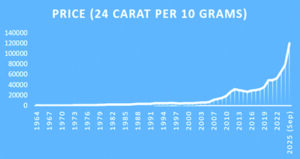
Gold has consistently appreciated in value across decades, with witnessing steepest rise in the 1970s and 2000s. The current decade (starting from 2020) is also showing a robust growth of 145.80%, reaffirming the role of gold as a reliable long-term investment.
Global Gold Reserve and Consumption Patterns-
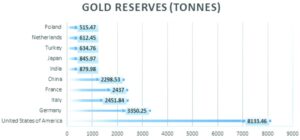
In the last few years, central banks of many countries have increased their gold purchases to safeguard against the ongoing and expected geopolitical turmoil. The RBI purchased around 57.49 tonnes of gold in the last fiscal year (FY 25). A similar trend has been observed among most central banks. Historically, gold has often moved in the opposite direction of the US dollar; therefore, central banks hold gold to hedge against any unfavorable movement of the US dollar. Most central banks regard gold volatility as a systemic factor to hedge, and therefore the central banks of countries like Poland, China, Turkey, India, and Kazakhstan have accelerated their gold accumulation in recent months. However, due to rising gold prices, cumulative gold purchases around the world have somewhat slowed down, especially in the April–June 2025 period, however it has again picked up from July onwards. As per the data of the World Gold Council, reported on September 3, 2025, the total official gold held by central banks around the world stands around 27054.15 tonnes.
According to the World Gold Council, in the past decade (2015-2024), the global annual average demand for gold has been around 4,338 tonnes against the average annual supply of 4,771 tonnes, which was largely driven by 75% of mined gold and 25% of recycled gold. As far as the demand is concerned, gold consumption in the form of jewelry remains the single largest segment, accounting for almost 49% of average annual demand, followed by bars and coins at 25%, purchases by central banks at 15%, various technical usages at 8%, and ETFs and similar products at 3%. As per the aforementioned data, as of 2024, the total above-ground stock of gold stood around 216,265 tonnes, out of which 45% was held in jewelry, 17% was held officially by central banks, and the remainder was held as investment and in other forms.
While government and central banks consider gold as a safe haven asset, individuals also treat it as a preferred investment. Globally, jewelry remains the largest form of consumption, and after China, India is the second-largest market in the world for gold jewelry. Weddings, festivals, and other auspicious occasions in India account for a large portion of gold demand, and its cultural significance has been responsible for the consistent high demand across generations. With the rising gold prices, the demand for gold jewelry fell in the first quarter of the current financial year, as compared to the same period of the last financial year; however, industry experts believe that the demand will pick up in the third and fourth quarters.
The following image shows where India and China both stand as compared to the rest of the world in terms of consumption of gold for jewelry.
The above image clearly shows that India accounts for around 12% of the gold jewelry market in the world. The household investment in gold jewelry is driven by various social and cultural factors. Indians often buy gold in the form of jewelry and coins on auspicious occasions such as festivals and special occasions such as weddings, anniversaries, etc. As far as regional holding of gold in jewelry form is concerned, a December 2023 report by the World Gold Council suggests that South India alone accounts for about 40% of the gold jewelry holdings, followed by West India with 25%, North India with 20%, and East India with 15%. The gold jewelry holdings by the household are also attributed to gold being considered a better investment option, especially by the rural and semi-urban populations of the country.
Gold as Collateral: Evolution of Gold Loans-
Due to gaps in credit access, gold jewelry has been widely used by Indian households for fulfilling various financial needs, such as payment of education fees, medical emergencies, and other personal usage. From the 1950s to the late 1990s, there was a dearth of formal lending channels that explored gold jewelry as collateral for lending; therefore, several informal pawnshops or moneylenders existed across the country to fulfill such needs. Since the year 1997, gold loans have been properly formalized, and to this day, the unorganized or smaller pawnshops still exist in large numbers, especially in small towns.
With the rising gold prices, India’s gold loan market has become more attractive. So far, the year 2025 has seen a record surge in global gold prices. On the 1st of January, 2025, the price for 24-carat gold was around ₹ 7800 per gram, and in September 2025, the same gold is now trading around ₹ 11,959 per gram, which is a return of 53.32% in 9 months. In recent years, the gold loan portfolio of banks and NBFCs has seen unprecedented y-o-y growth of more than 100%, and the reasons for increasing gold prices cannot be ascertained in black and white; however, the most talked-about reason is growing geopolitical uncertainty. For banks and regulators, the growing gold prices could have multifaceted effects on gold loans. On one hand, with the increasing value of gold, existing borrowers may want to apply for top-up loans or new loans; banks and NBFCs may experience higher loan disbursements. On the other hand, a price correction can impact the value of gold and may lead to increased default rates of gold loans. Drawing on the increasing gold prices and steep growth in gold loans, the RBI recently advised lenders to be cautious in lending against gold jewelry due to its speculative nature. The RBI has advised lenders to refrain from overreliance on the valuation of the collateral alone; and expects lenders to maintain high-quality credit assessment, and in other words, lenders should assess the repayment capacity of borrowers. The RBI has also come up with draft guidelines in April 2025 to enhance transparency and mitigate risks associated with advances against gold jewelry. This article discusses dynamics like banks’ liquidity, the probable impact on capital, credit risk and provisioning, financial inclusion and systemic risk concerns, and also provides strategic recommendations for stakeholders involved.
Liquidity and Capital Considerations-
The tenor of gold loans is capped at 12 months and since the borrower’s repayment capacity is unlikely to change significantly over such a short period of time, gold loan considered fully secured lending with lower risk, providing lenders an opportunity and a reliable source of funding According to a CRISIL report, gold loan securitization in India climbed to ₹5,390 in Q1 of FY 26, which accounts for about 11% of the total securitization volume in India. The industry average of NPA is around 2-3%, which also makes it an attractive option for funding. However, under the Basel III framework, gold remains outside the high-quality liquid asset classification, and it cannot be used for maintaining a liquidity buffer. The recent RBI draft guidelines talk about following strict valuation process and Loan to Value (LTV) instructions, as any breach in LTV for more than 30 days would attract an additional 1% provisioning, and that could impact the capital adequacy for the banks and NBFCs. The recent RBI draft guidelines focus on ensuring capital adequacy by addressing concentration risk and following prudent LTV norms.
Loan-to-Value Policies-
Loan-to-value ratios are central to the risk management policy for gold loans. In June 2025, the RBI increased the LTV for gold loans, to 85% and 80%, respectively, for loans less than Rs 2.5 lacs and for loans in the range of Rs 2.5 lacs to Rs 5 lacs. For loans above Rs 5 lacs, the LTV has been capped at 75%; these updated instructions will be effective not later than April 1, 2026. Globally, LTV ratios vary based on specific instructions from regulators and government. In countries like Malaysia and Indonesia, the LTV ratio can go up to 80%-90%, and some regulators restrict it to 50%-60%. The recent directions of RBI aim at improving liquidity position, especially among the small borrowers having a ticket size of Rs 5 lacs and less. Now with the increase in gold prices and higher availability of LTV headroom, we will have to see if the RBI will bring any new changes to the existing LTV to limit the risk of default in case of any large correction in gold prices.
Risk Exposure and Market Dynamics-
The increasing strain on the unsecured loan portfolio for individuals and the increased risk weightage from 100% to 125% for unsecured loans led the banks to explore lending in the gold loan segment. According to a PwC study, Striking Gold: The Rise of India’s Gold Loan Market, the growth of gold loans between 2007 and 2012 has been attributed to rising urbanization, a rising middle class population, and rising gold prices. Post 2012, the decreasing gold prices put pressures on gold loan portfolios of lenders across country, which became a reason for increasing NPAs. By 2015, most industry experts believed that the rally of growth of gold loans had come to an end; however, during and after events like demonetization in 2016 and the COVID-19 pandemic from 2019 to 2021, we saw further growth in gold loans, as many people struggled to get through medical emergencies and unexpected hospital bills. During the period of pandemic from 2019 to 2021, gold prices saw an extraordinary growth of around 38.32%. From the year 2022 onwards, many digital lenders and fintech companies set up their shops to enjoy the rally of the expanding gold loan market. Now with advanced technologies like artificial intelligence, the gold loan market is expected to grow further with better risk management practices and automated recovery tools. RBI reported to the Finance Ministry, that the total gold loan outstanding by Schedule Commercial Banks and NBFCs (Upper and Middle layers) stood at Rs. 11.92 lacs Crores, as of March 2025. A September 2024 press release by ICRA projects the gold loan portfolio of Indian lenders to reach around Rs. 15 trillion by March 2027.
According to the Financial Stability Report of June 2025, by the RBI, credit growth in the unsecured personal loan segment slowed down since September 2024. From a default risk perspective, gold loans have low historical delinquency and are therefore considered safer among the personal segment loans. Gold loans are highly collateralized, and with the easy e-auction process, banks and NBFCs find it reasonably easy to recover loans, in case of any default.
NPA Trends and Regulatory Oversight-
As per Lok Sabha Unstarred Question No. 4021, answered on August 18, 2025, the gross NPA percentage for banks and NBFCs (upper and middle layers) as of March 2025 is around 0.22% and 2.14%, respectively. The detailed trend of gold advances and NPAs for NBFCs (middle and upper layer) and scheduled commercial banks is shown below:
The following table shows the last 5 FYs, Gold Advances, and NPA by upper and middle layer NBFC as under
| Date | Total Advances (Outstanding) | Gross NPAs | NPA Ratio (%) |
| 31-03-2021 | 1,12,428 | 1,365 | 1.21 |
| 31-03-2022 | 1,18,971 | 2,749 | 2.31 |
| 31-03-2023 | 1,29,787 | 3,021 | 2.33 |
| 31-03-2024 | 1,54,315 | 3,634 | 2.35 |
| 31-03-2025 | 2,08,481 | 4,470 | 2.14 |
Note: The information given is for NBFCs in Middle and Upper Layer as on 31.12.2024
The following table shows the last 3 FYs, Gold Advances, and NPA by Scheduled Commercial Bank as under
| Date | Total Advances (Outstanding) | Gross NPAs | NPA Ratio (%) |
| 31-03-2023 | 6,15,341 | 1,217 | 0.20 |
| 31-03-2024 | 7,73,248 | 1,513 | 0.20 |
| 31-03-2025 | 9,83,716 | 2,162 | 0.22 |
Almost all NBFCs and banks have reported their NPA levels in single digits; however, in the last five years, the NPA levels of NBFCs have almost doubled from 1.21% in March 2021 to 2.14% in March 2025. The recent price volatility has introduced specific risks. As per a recent CNBC report, JP Morgan Chairman and CEO warned that the gold price rally could be heading into a bubble territory. Therefore the strict LTV breach guidelines of RBI are expected to act as a preventive measure for such risks, however banks and NBFCs will also need to employ robust internal monitoring and control systems to address any sudden shock.
The RBI has also shown concerns over irregularities in the underwriting of gold loans, especially by NBFCs. Issues like laxity in the valuation of gold, duplicate pledging, auctions without proper notice to the borrowers, and LTV breaches are some of the major concerns of the central bank. To address these concerns, the recent RBI guidelines now make it mandatory for entities to adopt measures of enhanced due diligence in the form of verification of gold ownership, restriction of fintech intermediaries from handling collateral directly, and auctioning of gold with transparency. RBI guidelines also include capping of gold loans to single borrower and group of borrowers to prevent concentration risk. To further strengthen the prevention of concentration risk, the weight limit for loans against gold ornaments and gold coins has been set at 1 kg and 50 g, respectively. The central banks further expects banks and NBFCs to ensure the end use of funds to prevent the utilization of funds for any unethical business practice. These steps aim to preserve the asset quality of the bank and would also ensure that provisioning is required only in cases of genuine credit risk and not for operational lapses.
Financial Inclusion and Societal Impact-
Gold loans, as a product, have been instrumental in enhancing the consumer credit access for the unbanked population of the country. NBFCs have played a key role in this, as they have penetrated the most rural and semi-urban areas of the population. Across globe, the Indian population holds the most gold in the form of jewelry, and millions of rural and urban households use that family-owned gold as collateral to finance their various needs. The agriculture gold loan, a product for farmers, works like an additional working capital line. Many small businesses and individuals opt for gold loans in emergency situations. Since gold-backed credit is secured, new-to-credit customers are also able to access credit easily as compared to other unsecured individual and business loans. The RBI also allows classification of agriculture gold loans as priority sector loans, provided banks are able to track the end use of funds. The same stands true for other global markets. As per a report of the World Gold Council, gold as collateral for loans has the potential to bring unbanked people into the formal economy, and the report suggested that lower-income ASEAN countries can benefit greatly from this model. And with the rising gold prices, credit limits for marginal farmers and many small individually owned businesses will also increase, which will further support financial inclusion and liquidity position of rural India. Gold loan is one such product that can both strengthen consumption and fund income-generating activities, and banks and NBFCs are indirectly guided by regulatory guidelines to focus more on diverting gold loans into genuine income-generating advances. However, as stated earlier, the growth needs to be balanced with prudence so as to avoid any operational risk.
Systemic Risk Considerations-
Gold loans are mostly household credit, and their exposure is interconnected with other banking exposures, but a large correction in gold price may affect many banks at once. Hypothetically, a correction of more than 25% could push many loans on the verge of default. The present level of securitization of gold loans is not like the home loans or other mortgage loans, so the problem won’t spread too far, like it did for US lenders in 2008; therefore, the contagion risk is limited. However, if a few big NBFCs report defaults in gold loans, then there is a distinct possibility that, this event can impact the banks that have funded those NBFCs for on-lending, and their capital might be adversely impacted. In 2024, RBI, after finding irregularities with the process of gold loans, gave all lenders a time of three months to review their policies of gold loans and take corrective actions to avoid any supervisory action from RBI. As previously stated, banks and NBFCs have been indirectly pushed into increasing their funding towards secured lending, like advances against gold jewelry. However, with such a steep rise in gold prices, we may see RBI introducing tools like stress testing to monitor risk and to ensure sustainable growth.
International Practices-
Globally, formal gold loan markets vary widely. In the case of advanced economies, banks don’t generally accept gold coins or jewelry as collateral; however, in countries situated in the regions of South Asia, Southeast Asia, and the Middle East, similar practices, like in India, are found. Countries like Malaysia and Singapore have proper frameworks for licensed pawnbrokers, which decide the LTV and auction rules. In Pakistan, many microfinance banks offer gold loans; however, they keep an overall cap of 35% on a bank’s portfolio.
However, most developed economies treat gold as a reserve commodity, and their banks have not commoditized gold as a product, though informal pawnbrokers exist in many countries. If we compare the global practices with that of India’s, then we will find that India’s gold loan market is a unique example, especially when it comes to formal and regulated lending. As far as the regulations are concerned, RBI has made it clear, with its Scale Based Regulation Framework, that the earlier difference in oversight between banks and NBFCs will keep getting smaller. However, international practices are often similar to that of India. Most central banks, which allow their banking and non-banking corporations to deal in gold loans, often stress on maintenance of a predefined LTV ratio, standardized valuation, and transparency in auction and documentation.
Conclusion: Outlook and Recommendations
The sharp rise in gold price has again reinforced the significance that gold loans hold among other personal loan products. Once considered a sign of a desperate attempt by households, especially old people in families, to secure cash in emergencies, now gold loans are mostly availed by people in the age group of 31-40 years (millennials), and with lenders focusing on digital lending and alternatives like loans against Gold ETFs (as per RBI guidelines) and Sovereign Gold Bonds, the Gen-Z population is also availing gold loans as a means to finance their various needs. With the rise of social media, many lenders are promoting these gold loan schemes on various social media platforms to educate the present generation about their gold loan offerings.
From a lender’s perspective, a gold loan is considered one of the safest among most loan products while deepening the access of credit, especially for the rural and semi-urban households. However, the growth needs to be balanced with caution. Lenders should not get swayed away by the strong collateral support and should stick to disciplined credit appraisals. Even when NPA levels are down and the recovery rate is strong, borrower income, repayment capacity, repayment history, and purpose of loans must always remain central to the gold loan underwriting process. With the recent rise in gold prices, existing gold loan customers are rushing to the banks and NBFCs for closure of existing loans and applying for new loans, due to the increased LTV headroom. Lending institutions need dynamic monitoring frameworks, which can map gold loans’ LTV with the market prices of gold and can provide trigger alerts whenever there is a breach in the LTV ratios. From customers’ point of view, financial literacy is also very important; they should not only concentrate on the increased availability of LTV headroom but should also learn about the vitality of clear documentation of the purity and weight of gold, repayment rules, charges, penalties, and most importantly, auction rules, so that they remain safe from any unfair treatment.
For RBI, the surge in gold prices should be a signal for enhanced oversight of all involved entities. Along with regular guidelines, the central banker can explore the possibility of introducing stress testing for individual banks to prepare for any sharp correction in gold prices. In late 2024 and early 2025, Indian banks experienced a liquidity crunch, so the RBI can also think about easing provisioning norms for gold loans, considering the low historical NPA levels and strict LTV norms. This could free up capital and would allow the banks to invest in or lend to more projects. The recent measures, such as having a cap on individual and group exposures, and setting a limit to the maximum quantity of gold (ornaments / coins) which can be pledged, will help in avoiding concentration risk.
In the end, a comprehensive regulatory framework across all the regulated entities and stakeholders is essential to address all the concerns and gaps, which have been and which can still be exploited by any party. A combination of strict policy discipline, robust practices, and forward-looking regulation can help sustain and direct this growth of gold loans to become a reliable financial instrument of liquidity and financial inclusion, especially for the rural and semi-urban population of the country.
Authored by:
Harsh Sen
Chief Manager (Research)
SBFI, ‘Chetana’, Indore