

Building Resilient Banks through Security Frameworks like NIST, ITIL, COBIT in Banking

Introduction
The modern banking ecosystem has evolved into a complex, technology-driven environment where speed, convenience, and digital accessibility define customer expectations. However, this transformation has also widened the scope of vulnerabilities and risks. Banks today face not only traditional operational and credit risks but also sophisticated cyber threats, compliance challenges, and reputational risks. In such a high-stakes landscape, adopting globally recognized security and governance frameworks such as the National Institute of Standards and Technology (NIST) Cybersecurity Framework, Information Technology Infrastructure Library (ITIL), and Control Objectives for Information and Related Technologies (COBIT) becomes critical.
These frameworks provide structured approaches to managing risks, strengthening governance, ensuring compliance, and embedding resilience in day-to-day operations. This article explores the importance of such frameworks in the banking sector, their unique contributions, and how they complement each other in creating a holistic security posture.
The Banking Sector’s Risk Landscape
Before delving into specific frameworks, it is essential to understand why banks need them. Some of the most pressing risks that financial institutions encounter include:
1. Cybersecurity Threats – Increasing incidents of phishing, ransomware, and sophisticated state-sponsored attacks target sensitive customer and financial data.
2. Regulatory Pressure – Banks must adhere to a wide range of compliance requirements such as RBI guidelines, GDPR, PCI DSS, and anti-money laundering regulations.
3. Operational Complexity – With multiple digital channels, third-party vendors, and cross-border operations, banks operate in highly complex ecosystems.
4. Customer Trust and Reputation – Any breach or downtime not only leads to financial loss but can also erode customer confidence.
5. Technological Advancements – With the rise of AI, blockchain, and cloud computing, banks must balance innovation with robust security practices.
In such an environment, relying on ad-hoc controls is no longer sufficient. A structured and standardized framework helps banks adopt a proactive, rather than reactive, approach to risks.
Understanding the Frameworks
1. NIST Cybersecurity Framework
The NIST Cybersecurity Framework (CSF) is one of the most widely adopted global standards for managing cybersecurity risk. It is built around five key functions: Identify, Protect, Detect, Respond, and Recover.
- Identify: Banks can assess critical assets, data flows, and risk exposures.
- Protect: Safeguards such as encryption, access management, and security training are implemented.
- Detect: Continuous monitoring systems are established to recognize anomalies.
- Respond: Incident response protocols are designed for quick containment.
- Recover: Plans are created for restoring operations and maintaining business continuity.
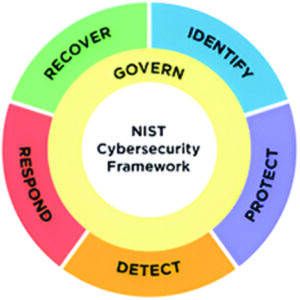
Special Update: New “govern” function has been introduced with revised version 2.O of NIST Cybersecurity Framework.
For banks, NIST provides a risk-based, flexible, and technology-neutral model that aligns with global best practices.
2. ITIL (Information Technology Infrastructure Library)
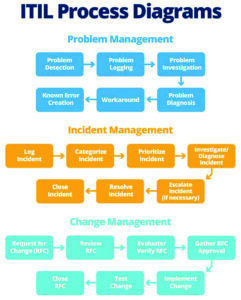
ITIL focuses on IT service management (ITSM) and provides guidelines to align IT services with business goals. Its importance in banking lies in:
- Service Delivery Excellence: Ensures reliable, customer-centric digital banking services.
- Incident and Problem Management: Reduces downtime by streamlining how service disruptions are handled.
- Change Management: Helps banks implement new technologies or updates without jeopardizing stability.
- Continual Service Improvement: Encourages ongoing evaluation of services to enhance efficiency.
Banks benefit from ITIL by ensuring their IT services remain consistent, resilient, and aligned with customer expectations.
3. COBIT (Control Objectives for Information and Related Technologies)
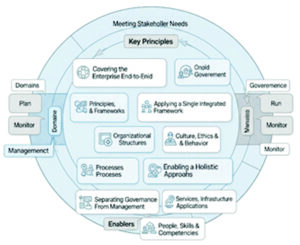
COBIT is an IT governance and management framework that bridges the gap between technical IT teams and business leadership. Its relevance to banking includes:
- Governance: Establishes accountability and oversight over IT-related decisions.
- Compliance: Ensures adherence to regulatory obligations.
- Risk Optimization: Helps banks evaluate, prioritize, and mitigate IT and security risks.
- Alignment with Business Objectives: Ensures technology initiatives directly support banking strategies.
COBIT is especially valuable in banks where strategic decision-making must integrate IT, risk, and business imperatives.
Importance of These Frameworks in Banking
1. Strengthening Cybersecurity Posture
Frameworks like NIST help banks implement layered security controls, identify vulnerabilities, and maintain continuous monitoring. They provide structured defense against cyberattacks, ensuring that both prevention and recovery measures are in place.
2. Enhancing Customer Trust
Customer trust is the lifeblood of banking. When banks adopt recognized frameworks, they send a strong message that security and governance are taken seriously. Transparent, reliable services backed by robust frameworks enhance public confidence.
3. Regulatory Compliance
Banking is one of the most heavily regulated industries. Frameworks like COBIT and NIST simplify compliance by aligning internal controls with external regulations. They help banks demonstrate due diligence during audits and avoid penalties.
4. Operational Efficiency
ITIL plays a crucial role in ensuring banking services are always available, disruptions are minimized, and incidents are resolved swiftly. This operational excellence translates into smoother customer experiences and higher satisfaction.
5. Risk Management and Governance
Banks cannot eliminate risks entirely, but frameworks help them manage and optimize risks in line with their appetite. COBIT provides governance mechanisms that ensure IT decisions are transparent, accountable, and aligned with business strategies.
6. Supporting Innovation
Frameworks do not hinder innovation; rather, they provide a safe foundation for adopting new technologies. For instance, banks exploring AI-driven credit scoring or blockchain-based settlements can use frameworks to ensure security and compliance remain intact.
Complementary Use of Frameworks
While each framework has unique strengths, banks gain maximum value when they are applied in tandem:
- NIST + COBIT: While NIST focuses on security controls, COBIT ensures these are aligned with business governance and compliance goals.
- ITIL + NIST: ITIL ensures service stability, while NIST focuses on securing those services.
- COBIT + ITIL: COBIT drives governance at the top level, while ITIL operationalizes efficiency in service management.
Together, they create a multi-layered, comprehensive approach that covers governance, service delivery, and security.
Real-World Relevance to Indian Banking
In India, the Reserve Bank of India (RBI) has emphasized the need for robust cybersecurity frameworks through circulars and guidelines. With increasing digital adoption under initiatives like Digital India, banks face heightened cyber risks. For example:
- Digital Loan Processing requires frameworks to secure sensitive customer data.
- UPI Transactions must remain resilient and available, making ITIL’s incident management practices highly relevant.
- Regulatory Audits increasingly look for alignment with frameworks like NIST and COBIT to ensure global best practices are followed.
Several leading Indian banks have already embedded these frameworks into their IT and risk management strategies, improving resilience and meeting both domestic and international standards.
Challenges in Implementing Frameworks
While beneficial, adopting frameworks is not without challenges:
1. Cost and Resource Intensity – Implementation requires skilled professionals and investment.
2. Complexity – Adapting multiple frameworks to a large-scale banking ecosystem can be complex.
3. Change Management – Resistance to new processes and cultural barriers can hinder adoption.
4. Continuous Updating – Frameworks evolve, and banks must regularly update practices to stay compliant.
Overcoming these challenges requires leadership commitment, skilled professionals, and a culture that embraces governance and security.
The Future of Security Frameworks in Banking
As banking continues to embrace emerging technologies, the role of frameworks will only grow. Trends likely to shape the future include:
- Integration with AI and Automation: Framework-driven controls will increasingly rely on AI for threat detection and automated response.
- Cloud Security Alignment: With more banks moving to the cloud, frameworks will adapt to ensure compliance in hybrid and multi-cloud environments.
- Focus on ESG (Environmental, Social, Governance): Governance frameworks like COBIT will expand to address sustainability and ethical concerns.
- Global Convergence: Regulators may increasingly expect banks to align with internationally recognized standards like NIST and COBIT.
Conclusion
In the digital-first banking environment, frameworks such as NIST, ITIL, and COBIT are not optional; they are indispensable. They provide a structured, consistent, and globally recognized approach to tackling cyber risks, ensuring compliance, enhancing customer trust, and driving operational excellence.
Banks that embrace these frameworks are better positioned to not only defend against threats but also to innovate responsibly and compete effectively in the global financial marketplace. In short, frameworks provide the bridge between security, governance, and business growth, ensuring that banks remain resilient, trustworthy, and future-ready.
Authored By:
Sumit Roy
Chief Manager (Faculty IT & Digital Banking)
Union Bank of India
Union Learning Academy
Powai, Mumbai